


Page 239 - A GRAMMAR OF BHOJPURI _ PhD Dissertation 2020 TU
P. 239
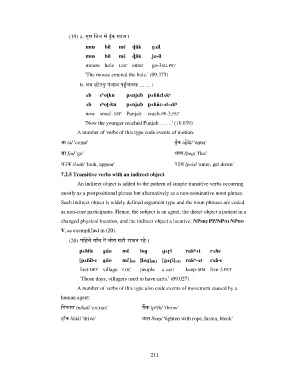
(19) a. मुस िबल मB ढुँक गइल ।
̈
mus bil mẽ ɖũk ɡʌil
̈
mus bil mẽ ɖũk jɑ-il
mouse hole LOC enter go-3SG.PST
'The mouse entered the hole.' (09.375)
b. अब छोटकु पंजाब प[ँचलख ... ... ।
ʌb cʰoʈku pʌnjɑb pʌɦũclʌkʰ
ʌb cʰoʈ-ku pʌnjɑb pʌɦũc-ʌl-ʌkʰ
now small-DEF Punjab reach-PP-3.PST
'Now the younger reached Punjab
' (10.039)
A number of verbs of this type code events of motion:
̈
आ /ɑ/ 'come' ढुँक /ɖũk/ 'enter'
जा /jɑ/ 'go' भाग /b ̤ ɑɡ/ 'flee'
लउक /lʌuk/ 'look, appear' पइस /pʌis/ 'enter, get down'
7.2.5 Transitive verbs with an indirect object
An indirect object is added to the pattern of simple transitive verbs occurring
mostly as a postpositional phrase but alternatively as a non-nominative noun phrase.
Such indirect object is widely defined argument type and the noun phrases are coded
as non-core participants. Hence, the subject is an agent, the direct object a patient in a
changed physical location, and the indirect object a locative: NPSBJ PP/NPIO NPDO
V, as exemplified in (20).
(20) पिहले गाँव मB लोग गड़ी राखत रहे ।
pʌɦile ɡɑ ̃ o mẽ loɡ ɡʌɽi rɑkʰʌt rʌɦe
[pʌɦil-e ɡɑ ̃ o mẽ] IO [loɡ] SBJ [ɡʌɽi] DO rɑkʰ-ʌt rʌɦ-e
first-DEF village LOC people a cart keep-SIM live-3.PST
'Those days, villagers used to have carts.' (09.027)
A number of verbs of this type also code events of movement caused by a
human agent:
िनकाल /nikɑl/ 'extract' फेँ क /pʰẽk/ 'throw'
हाँक /ɦɑk/ 'drive' बाऩ /bɑn ̥ / 'tighten with rope, fasten, block'
̃
211

