


Page 143 - A GRAMMAR OF BHOJPURI _ PhD Dissertation 2020 TU
P. 143
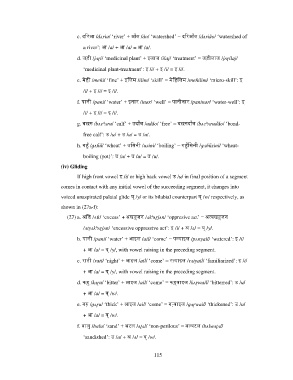
c. द0रआ /dʌriɑ/ river + आँव /ɑo/ watershed = द0रआँव /dʌriɑo/ watershed of
̃
̃
a river: आ /ɑ/ + आ /ɑ/ = आ /ɑ/.
d. जड़ी /jʌɽi/ medicinal plant + इलाज /ilɑj/ treatment = जड़ीलाज /jʌɽilɑj/
medicinal plant-treatment: इ /i/ + इ /i/ = इ /i/.
e. मेही /meɦi/ fine + इिलम /ilim/ skill = मेिहिलम /meɦilim/ micro-skill: इ
/i/ + इ /i/ = इ /i/.
f. पानी /pɑni/ water + इनार /inɑr/ well = पानीनार /pɑninɑr/ water-well: इ
/i/ + इ /i/ = इ /i/.
̃
̃
g. बछi /bʌcʰʌru/ calf + उदाँव /udɑo/ free = बछiदाँव /bʌcʰʌrudɑo/ bond-
free calf: उ /u/ + उ /u/ = उ /u/.
h. गjँ /ɡʌɦũ/ wheat + उिसनी /usini/ boiling = गjँिसनी /ɡʌɦũsini/ wheat-
boiling (pot): उ /u/ + उ /u/ = उ /u/.
(iv) Gliding
If high front vowel इ /i/ or high back vowel उ /u/ in final position of a segment
comes in contact with any initial vowel of the succeeding segment, it changes into
voiced unaspirated palatal glide य् /y/ or its bilabial counterpart व् /w/ respectively, as
shown in (27a-f):
(27) a. अित /ʌti/ excess + अख*जन /ʌkʰʌɽjʌn/ oppresive act = अAयख*जन
/ʌtyʌkʰʌɽjʌn/ excessive oppressive act: इ /i/ + अ /ʌ/ = य् /y/.
b. पानी /pɑni/ water + आइल /ɑil/ come = पIयाइल /pʌnyail/ watered: इ /i/
+ आ /ɑ/ = य् /y/, with vowel raising in the preceding segment.
c. राती /rɑti/ night + आइल /ɑil/ come = रAयाइल /rʌtyɑil/ familiarized: इ /i/
+ आ /ɑ/ = य् /y/, with vowel raising in the preceding segment.
d. कड़d /kʌɽu/ bitter + आइल /ɑil/ come = क*वाइल /kʌɽwɑil/ bitterred: उ /u/
+ आ /ɑ/ = व् /w/.
e. गi़ /ɡʌr ̥ u/ thick + आइल /ɑil/ come = गmवाइल /ɡʌr ̥ wɑil/ thickened: उ /u/
+ आ /ɑ/ = व् /w/.
f. बालु /bɑlu/ sand + अटल /ʌʈʌl/ non-perilous = बnवटल /bʌlwʌʈʌl/
sandished: उ /u/ + अ /ʌ/ = व् /w/.
115

