


Page 469 - A GRAMMAR OF BHOJPURI _ PhD Dissertation 2020 TU
P. 469
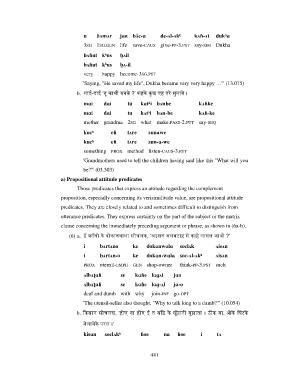
u ɦʌmʌr jɑn bʌ ̃ c-ɑ de-ʌl-ʌkʰ kʌɦ-ʌt dukʰɑ
3SG 1SG.GEN life save-CAUS give-PP-3.PST say-SIM Dukha
bʌɦut kʰus b ̤ ʌil
bʌɦut kʰus b ̤ ʌ-il
very happy become-3SG.PST
'Saying, "He saved my life", Dukha became very very happy
''' (13.075)
b. माई-दाई तू काथी बनबे ? कहके कुछ एह तरे सुनावे ।
mɑi dɑi tu kɑtʰi bʌnbe kʌɦke
mɑi dɑi tu kʌtʰi bʌn-be kʌɦ-ke
mother grandma 2SG what make.PASS-2.FUT say-SEQ
kucʰ eɦ tʌre sunɑwe
kucʰ eɦ tʌre sun-ɑ-we
something PROX method listen-CAUS-3.PST
'Grandmothers used to tell the children having said like this "What will you
be?"' (03.303)
a) Propositional attitude predicates
Those predicates that express an attitude regarding the complement
proposition, especially concerning its verisimilitude value, are propositional attitude
predicates. They are closely related to and sometimes difficult to distinguish from
utterance predicates. They express certainty on the part of the subject or the matrix
clause concerning the immediately preceding argument or phrase, as shown in (6a-b).
(6) a. ई बतXनो के दोकानवाला सोचलक, अइसन अलबटाह से काहे लागल जाओ ?
i bʌrtʌno ke dokɑnwɑlɑ soclʌk ʌisʌn
i bʌrtʌn-o ke dokɑn-wɑlɑ soc-ʌl-ʌkʰ ʌisʌn
PROX utensil-EMPH GEN shop-owner think-PP-3.PST such
ʌlbʌʈɑɦ se kɑɦe lɑɡʌl jɑo
ʌlbʌʈɑɦ se kɑɦe lɑɡ-ʌl jɑ-o
deaf and dumb with why join-INF go-OPT
'The utensil-seller also thought, "Why to talk long to a dumb?"' (10.054)
b. !कसान सोचलख, होए ना होए ई त साँढ़े के खुँड़ारी बुझाता । ठीक बा, ओके िपटके
बेलावेके परल ।
kisɑn soclʌkʰ ɦoe nɑ ɦoe i tʌ
441

