


Page 339 - A GRAMMAR OF BHOJPURI _ PhD Dissertation 2020 TU
P. 339
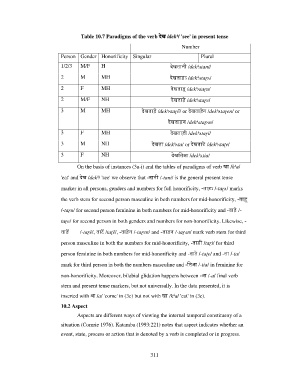
Table 10.7 Paradigms of the verb देख /dekʰ/ 'see' in present tense

                                                                             Number
                           Person  Gender  Honorificity  Singular                    Plural

                           1/2/3   M/F     H                            देखतानी /dekʰʌtɑni/

                           2       M       MH                           देखताड़ऽ /dekʰʌtɑɽʌ/
                           2       F       MH                           देखताड़ू /dekʰʌtɑɽu/

                           2       M/F     NH                           देखताड़े /dekʰʌtɑɽe/

                           3       M       MH               देखताड़& /dekʰʌtɑɽẽ/ or देखताड़ेन /dekʰʌtɑɽen/ or

                                                                       देखताड़न /dekʰʌtɑɽʌn/

                           3       F       MH                           देखताड़ी /dekʰʌtɑɽi/

                           3       M       NH                   देखता /dekʰʌtɑ/ or देखताटे /dekʰʌtɑʈe/

                           3       F       NH                            देखितआ /dekʰʌtiɑ/

                                 On the basis of instances (3a-i) and the tables of paradigms of verb खा /kʰɑ/

                           'eat' and देख /dekʰ/ 'see' we observe that -तानी /-tɑni/ is the general present tense

                           marker in all persons, genders and numbers for full honorificity, -ताड़ऽ /-tɑɽʌ/ marks
                           the verb stem for second person masculine in both numbers for mid-honorificity, -ताड़ू

                           /-tɑɽu/ for second person feminine in both numbers for mid-honorificity and -ताड़े /-

                           tɑɽe/ for second person in both genders and numbers for non-honorificity. Likewise, -

                           ताड़&        /-tɑɽẽ/, ताट& /tɑʈẽ/, -ताड़ेन /-tɑɽen/ and -ताड़न /-tɑɽʌn/ mark verb stem for third

                           person masculine in both the numbers for mid-honorificity, -ताड़ी /tɑɽi/ for third

                           person feminine in both numbers for mid-honorificity and -ताटे /-tɑʈe/ and -ता /-tɑ/
                           mark for third person in both the numbers masculine and -ितआ /-tiɑ/ in feminine for

                           non-honorificity. Moreover, bilabial glidation happens between -आ /-ɑ/ final verb

                           stem and present tense markers, but not universally. In the data presented, it is

                           inserted with आ /ɑ/ 'come' in (3c) but not with खा /kʰɑ/ 'eat' in (3e).
                           10.2 Aspect

                                 Aspects are different ways of viewing the internal temporal constitueny of a
                           situation (Comrie 1976). Katamba (1993:221) notes that aspect indicates whether an
                           event, state, process or action that is denoted by a verb is completed or in progress.


                                                                311

