


Page 165 - A GRAMMAR OF BHOJPURI _ PhD Dissertation 2020 TU
P. 165
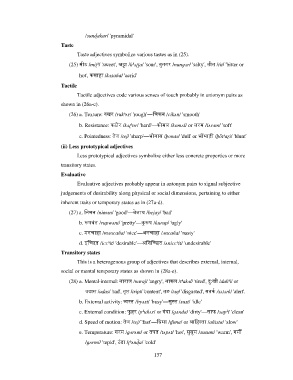
/sunɖɑkɑr/ 'pyramidal'
Taste
Taste adjectives symbolize various tastes as in (25).
(25) मीठ /miʈʰ/ 'sweet', खQा /kʰʌʈʈɑ/ 'sour', नुनगर /nunɡʌr/ 'salty', तीत /tit/ 'bitter or
hot', कसाहा /kʌsɑɦɑ/ 'acrid'
Tactile
Tactile adjectives code various senses of touch probably in antonym pairs as
shown in (26a-c).
(26) a. Texture: >खर /rukʰʌr/ 'rough'िचकन /cikʌn/ 'smooth'
b. Resistance: कठोर /kʌʈʰor/ 'hard'कोमल /komʌl/ or लरम /lʌrʌm/ 'soft'
c. Pointedness: तेज /tej/ 'sharp'भोनास /b ̤ onɑs/ 'dull' or भRथाड़ी /b ̤ õtʰɑɽi/ 'blunt'
(ii) Less prototypical adjectives
Less prototypical adjectives symbolize either less concrete properties or more
transitory states.
Evaluative
Evaluative adjectives probably appear in antonym pairs to signal subjective
judgements of desirability along physical or social dimensions, pertaining to either
inherent traits or temporary states as in (27a-d).
(27) a. िनमन /nimʌn/ 'good'बेजाय /bejɑy/ 'bad'
b. =पवंत /rupwʌnt/ 'pretty'कु=प /kurup/ 'ugly'
c. मनचाहा /mʌncɑɦɑ/ 'nice'अनचाहा /ʌncɑɦɑ/ 'nasty'
d. इिSछत /iccʰit/ 'desirable'अिनिSछत /ʌniccʰit/ 'undesirable'
Transitory states
This is a heterogenous group of adjectives that describes external, internal,
social or mental temporary states as shown in (28a-e).
(28) a. Mental-internal: नाराज /nɑrɑj/ 'angry', थाकल /tʰɑkʌl/ 'tired', दुःखी /dukʰi/ or
उदास /udɑs/ 'sad', तृV /tript/ 'content', तङ /tʌŋ/ 'disgusted', सतकO /sʌtʌrk/ 'alert'.
b. External activity: WXत /byʌst/ 'busy'सुXत /sust/ 'idle'
c. External condition: फु हर /pʰuɦʌr/ or गंदा /ɡʌndɑ/ 'dirty'साफ /sɑpʰ/ 'clean'
d. Speed of motion: तेज /tej/ 'fast'िधमा /d ̤ imɑ/ or आिहXता /ɑɦistɑ/ 'slow'
e. Temperature: गरम /ɡʌrʌm/ or तपत /tʌpʌt/ 'hot', सुसुम /susum/ 'warm', गमY
̈
/ɡʌrmi/ 'tepid', ठंढा /ʈʰʌnɖɑ/ 'cold'
137

