


Page 537 - A GRAMMAR OF BHOJPURI _ PhD Dissertation 2020 TU
P. 537
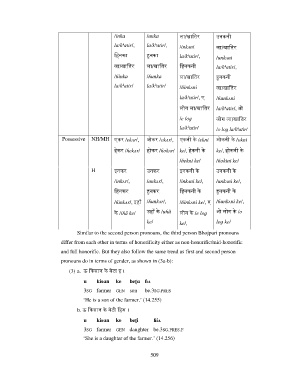
/inkɑ /unkɑ ला/खाितर उनकनी
lɑ/kʰɑtir/, lɑ/kʰɑtir/, /inkʌni ला/खाितर
िहनका 5नका lɑ/kʰɑtir/, /unkʌni
ला/खाितर ला/खाितर िहनकनी lɑ/kʰɑtir/,
/ɦinkɑ /ɦunkɑ ला/खाितर 5नकनी
lɑ/kʰɑtir/ lɑ/kʰɑtir/ /ɦinkʌni ला/खाितर
lɑ/kʰɑtir/, ए /ɦunkʌni
लोग ला/खाितर lɑ/kʰɑtir/, ओ
/e loɡ लोग ला/खाितर
lɑ/kʰɑtir/ /o loɡ lɑ/kʰɑtir/
Possessive NH/MH एकर /ekʌr/, ओकर /okʌr/, एकनी के /ekni ओकनी के /okni
हेकर /ɦekʌr/ होकर /ɦokʌr/ ke/, हेकनी के ke/, होकनी के
/ɦekni ke/ /ɦokini ke/
H इनकर उनकर इनकनी के उनकनी के
/inkʌr/, /unkʌr/, /inkʌni ke/, /unkʌni ke/,
िहनकर 5नकर िहनकनी के 5नकनी के
/ɦinkʌr/, इहाँ /ɦunkʌr/, /ɦinkʌni ke/, ए /ɦunkʌni ke/,
̃
के /iɦɑ ke/ उहाँ के /uɦɑ ̃ लोग के /e loɡ ओ लोग के /o
ke/ ke/, loɡ ke/
Similar to the second person pronouns, the third person Bhojpuri pronouns
differ from each other in terms of honorificity either as non-honorific/mid-honorific
and full honorific. But they also follow the same trend as first and second person
pronouns do in terms of gender, as shown in (3a-b):
(3) a. ऊ *कसान के बेटा ह ।
u kisɑn ke beʈɑ ɦʌ
3SG farmer GEN son be.3SG.PRES
He is a son of the farmer. (14.255)
b. ऊ *कसान के बेटी िहअ ।
u kisɑn ke beʈi ɦiʌ
3SG farmer GEN daughter be.3SG.PRES.F
She is a daughter of the farmer. (14.256)
509

