


Page 594 - A GRAMMAR OF BHOJPURI _ PhD Dissertation 2020 TU
P. 594
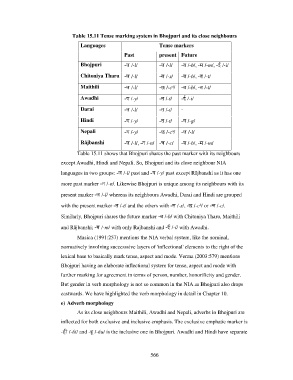
Table 15.11 Tense marking system in Bhojpuri and its close neighbours
                                   Languages                        Tense markers

                                                     Past           present  Future
                                   Bhojpuri          -ल /-l/        -ल /-l/   -ब /-b/, -म /-m/, -ई /-i/

                                   Chitoniya Tharu  -ल /-l/         -स /-s/   -ब /-b/, -त /-t/

                                   Maithili          -ल /-l/        -छ /-cʰ/  -ब /-b/, -त /-t/

                                   Awadhi            -य /-y/        -त /-t/   -ई /-i/

                                   Darai             -ल /-l/        -त /-t/   -

                                   Hindi             -य /-y/        -त /-t/   -ग /-ɡ/

                                   Nepali            -य /-y/        -छ /-cʰ/  -ल /-l/

                                   Rājbanshi         -ल /-l/, -न /-n/  -च /-c/   -ब /-b/, -म /-m/

                                 Table 15.11 shows that Bhojpuri shares the past marker with its neighbours
                           except Awadhi, Hindi and Nepali. So, Bhojpuri and its close neighbour NIA
                           languages in two groups: -ल /-l/ past and -य /-y/ past except Rājbanshi as it has one

                           more past marker -न /-n/. Likewise Bhojpuri is unique among its neighbours with its

                           present marker -ल /-l/ whereas its neighbours Awadhi, Darai and Hindi are grouped

                           with the present marker -त /-t/ and the others with -स /-s/, -छ /-cʰ/ or -च /-c/.

                           Similarly, Bhojpuri shares the future marker -ब /-b/ with Chitoniya Tharu, Maithili

                           and Rājbanshi; -म /-m/ with only Rajbanshi and -ई /-i/ with Awadhi.
                                 Masica (1991:257) mentions the NIA verbal system, like the nominal,

                           normatively involving successsive layers of 'inflectional' elements to the right of the
                           lexical base to basically mark tense, aspect and mode. Verma (2003:579) mentions

                           Bhojpuri having an elaborate inflectional system for tense, aspect and mode with
                           further marking for agreement in terms of person, number, honorificity and gender.

                           But gender in verb morphology is not so common in the NIA as Bhojpuri also drops
                           eastwards. We have highlighted the verb morphology in detail in Chapter 10.
                           e) Adverb morphology

                                 As its close neighbours Maithili, Awadhi and Nepali, adverbs in Bhojpuri are
                           inflected for both exclusive and inclusive emphasis. The exclusive emphatic marker is

                           -ही /-ɦi/ and -T /-ɦu/ is the inclusive one in Bhojpuri. Awadhi and Hindi have separate


                                                                566

